Renovating Near Historic Richmond Town
Historic Richmond Town preserves more than 30 historic buildings at the center of the island. Here's what renovation and cleanout work looks like for the neighborhood built up around it.
ReadStaten Island, NY guide
Placing a dumpster on a Staten Island street involves a real NYC DOT permit process — but placing one on your own driveway generally doesn't. Here's how the structure actually works.
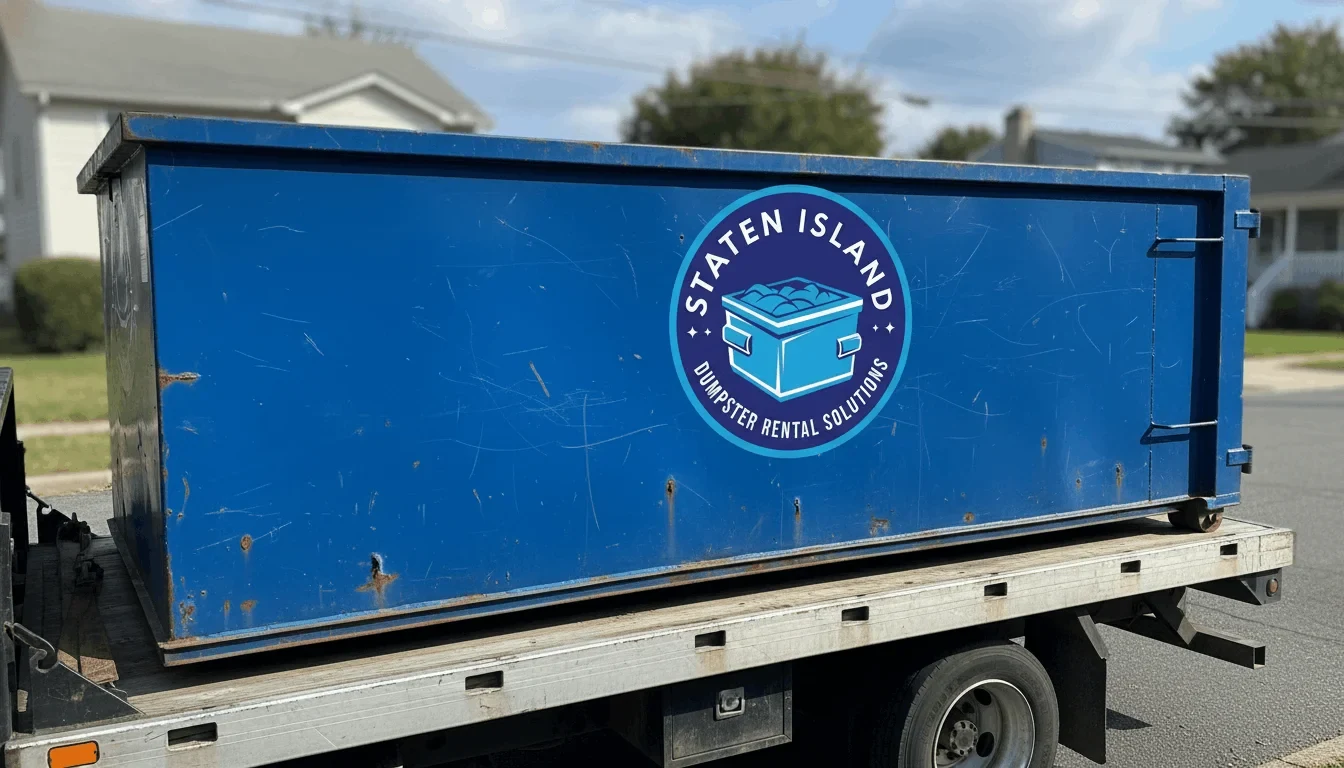
This is the single most important distinction in NYC's dumpster-permit rules: any commercial-grade refuse or debris container placed on a city street — in the curb lane, adjacent to the curb — requires a New York City DOT permit. A container placed entirely on private property, such as a driveway or yard, generally does not require this specific street permit. For most Staten Island homeowners with driveway space, that means the simplest path is keeping the container on your own property whenever the job allows it.
When a street permit is needed, it must be obtained by the carting company or general contractor — not by the property or business owner directly. This is genuinely useful to know if you're comparing dumpster companies: a hauler who understands and handles this process is doing real compliance work on your behalf, not just dropping off a container and leaving the paperwork to you.
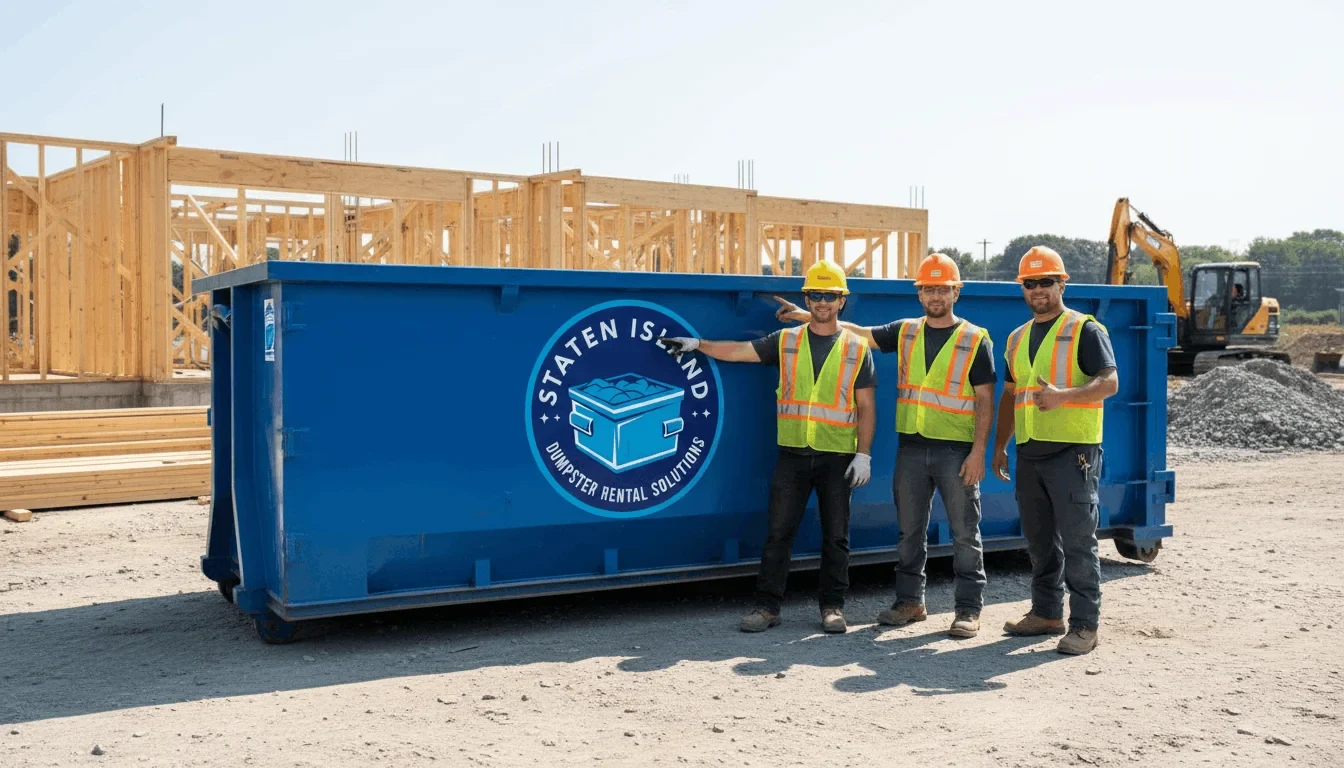
NYC's container-permit structure breaks into four categories. A Commercial Refuse Container (CRC) permit covers a general-purpose container on a city street, with each permit covering one container for up to five consecutive days — if the container is swapped out (emptied and replaced) within that window, no new permit is needed, but adding a second container at the same location requires a separate permit. A Construction Debris Container permit is for active worksites that already hold a Department of Buildings permit, and can run for up to 90 days. A Bulk Item Refuse Container permit is for homeowners or businesses doing a bulk-item cleanout only, also capped at up to five consecutive days. A Refuse Container Enclosure is a more elaborate, semi-permanent structure requiring a Revocable Consent from DOT's Office of Franchises, Concessions and Consents, with review by multiple city agencies.
Street placement is governed by Section 2-14(f) of the NYC Highway Rules. A container permit does not reserve a parking space, and the city's online permitting system flags conflicts with scheduled street closures or special events — worth knowing if your project timeline is tight. It's also worth knowing that storage pods for non-construction purposes are explicitly prohibited on city streets, which is a different category from a proper roll-off dumpster permit.
If your project fits entirely on your own driveway or lot — the case for most residential cleanouts and remodels — permit paperwork typically isn't a factor at all. If the container needs to sit in the street, because of a tight lot or a larger construction project, the permit process runs through your contractor or carting company, not you directly. Either way, current fee schedules for any permit type are best confirmed directly with NYC DOT before your project date, since specific dollar amounts weren't something we'd invent or guess at here.
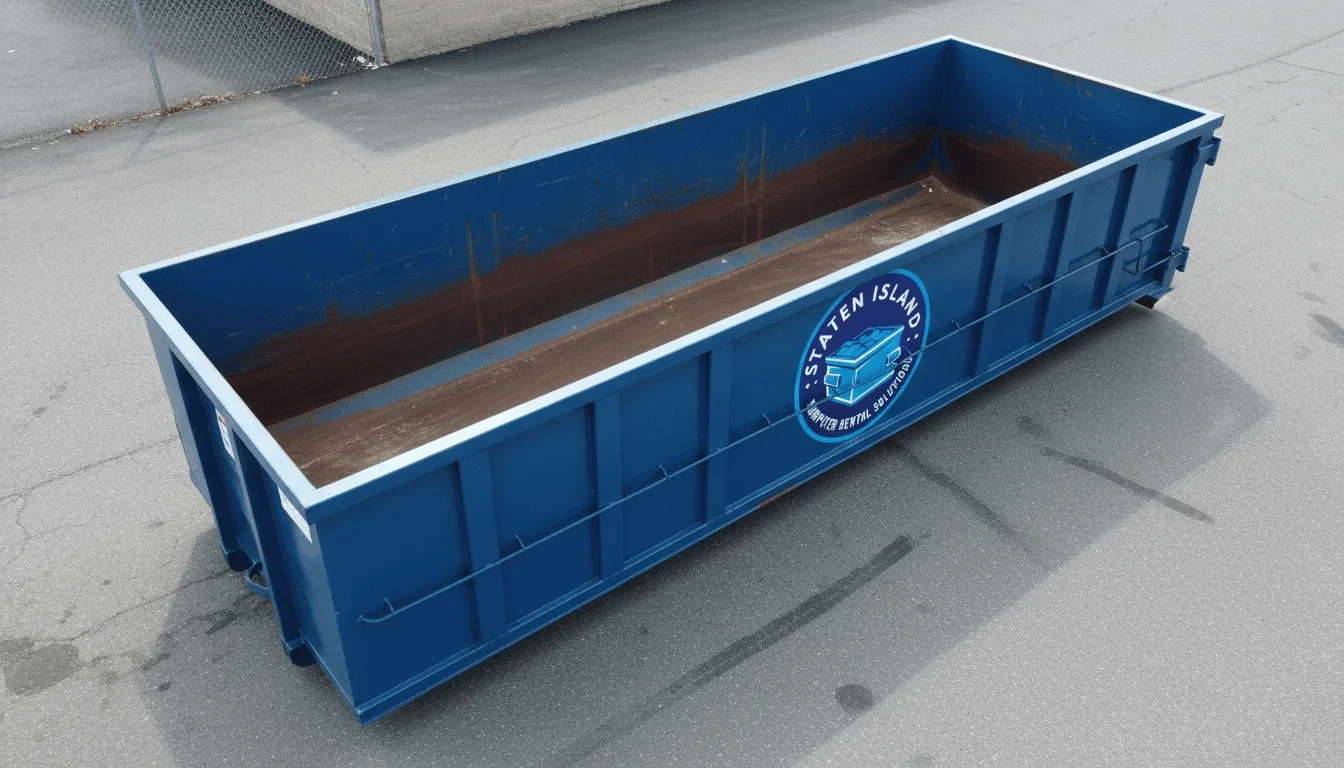
Talk through both size and placement in the same call — a 10 or 15 yard container is far more likely to fit entirely on a driveway than a 30 or 40 yard, which can help you avoid the street-permit question altogether on a smaller job. For larger construction projects that do need street placement and a longer-duration permit, we'll help you think through the timing so the container and the paperwork line up.
| Size | Dimensions | Capacity | Weight included | Best for |
|---|---|---|---|---|
| 10 Yard Dumpster | 14 ft long × 7.5 ft wide × 3.5 ft high | 50–70 bags | 1–2 tons | Small cleanouts, roofing shingles, tight driveways. |
| 15 Yard Dumpster | 16 ft long × 7.5 ft wide × 4.5 ft high | 80–100 bags | 2–3 tons | Flooring, bathroom or kitchen updates, multi-room cleanouts. |
| 20 Yard Dumpster | 22 ft long × 7.5 ft wide × 4.5 ft high | 110–130 bags | 3–4 tons | Medium remodels, roofing jobs, light construction. |
| 30 Yard Dumpster | 22 ft long × 7.5 ft wide × 6 ft high | 170–190 bags | 4–5 tons | Whole-home projects, office cleanouts. |
| 40 Yard Dumpster | 22 ft long × 7.5 ft wide × 8 ft high | 230–250 bags | 5–6 tons | Large builds, commercial or industrial jobs. |
Call (718) 808-9313 and describe your Staten Island property — driveway space, street access, and the scope of the project. We'll help you figure out whether street placement and a DOT permit are even part of the picture, and size the container either way.
Talk to a real person
Call and describe the job. Flat-rate pricing, a sized container, and a delivery time on the same call.
Mon–Sat 7:00am – 7:00pm
From this guide
Generally no — a container placed entirely on private property such as a driveway or yard does not require the NYC DOT street permit. That permit applies to containers placed on a city street.
The permit must be obtained by the carting company or general contractor, not directly by the property or business owner.
A Construction Debris Container permit, for active worksites with a Department of Buildings permit, can run for up to 90 days. General cleanout containers on the street are limited to 5-day permits.
Section 2-14(f) of the NYC Highway Rules governs street placement, and a container permit does not reserve a parking space.
Keep reading
Historic Richmond Town preserves more than 30 historic buildings at the center of the island. Here's what renovation and cleanout work looks like for the neighborhood built up around it.
ReadSnug Harbor's Temple Row buildings have anchored Staten Island's North Shore since 1833. Here's what cleanout and renovation work looks like for the neighborhoods built up around this landmark campus.
ReadStaten Island is the only NYC borough without a subway connection to the rest of the city. Here's what that genuinely unique transit geography means for scheduling a dumpster delivery.
Read