New York 811: Call Before You Dig on Staten Island
Before you dig anywhere on Staten Island — a fence post, a landscaping project, a new footing — the service that actually covers the borough is New York 811. Here's what that means in practice.
ReadStaten Island, NY guide
Hurricane Sandy remains the single most significant weather event in modern Staten Island history. Here's what that means for storm-debris preparation today, told factually and respectfully.
Hurricane Sandy struck on October 29, 2012, and it remains the most significant weather event in modern Staten Island history. At least 21 people died on Staten Island — the highest borough death toll in the city, out of 43 total New York City deaths attributed to the storm. We mention this plainly and respectfully, not to sensationalize it: it's the reason storm preparation is taken seriously here, and it's context worth understanding before a season arrives, not after.
Midland Beach, New Dorp Beach and Oakwood Beach on the island's East Shore were the hardest-hit communities — floodwaters there were severe enough to wash away entire blocks of houses. Storm surge at the northern tip of the island reached 9.56 feet above normal tide levels, with water levels 14.58 feet above average low tide, surpassing the prior record set by Hurricane Irene the year before. Sustained winds of 40 to 60 mph, gusting to 80 mph, were recorded on the island, and a large oil tanker, the John B. Caddell, was driven ashore during the storm — one of the enduring images from that week.
Given Sandy's severity and Staten Island's extensive East Shore and North Shore waterfront exposure, the borough is recognized as vulnerable to coastal flooding and long-term sea-level rise. That's not alarmist — it's the reason building and flood-insurance requirements have tightened in many waterfront-adjacent neighborhoods since 2012, and it's a real factor for anyone renovating or rebuilding a property in a flood-exposed area.
More recent, smaller-scale events show this is an ongoing pattern, not just history. A citywide flash-flood event on August 21, 2026 brought roughly two inches of rain in under an hour to parts of Staten Island and Brooklyn, causing real flash flooding and drawing renewed public calls from local community-board members for long-term flood-mitigation and buyout solutions. As of this writing, that remains an active, developing infrastructure conversation rather than a settled outcome — worth watching, not something we'll overstate here.
Storm-related debris on Staten Island tends to fall into two categories: flood-damaged interior material — water-soaked drywall, insulation, flooring, carpet and belongings that can't be salvaged, most common in East Shore and North Shore waterfront-adjacent homes — and wind-related exterior debris, like downed limbs, damaged fencing and storm-battered roofing, which can happen anywhere on the island. Flood cleanup in particular needs to move fast: wet material left in place invites mold, and every day of delay tends to make the job larger.
The most useful hurricane-season preparation isn't reactive — it's knowing, before a storm ever forms, that a fast cleanup plan matters and knowing who to call the moment it's safe to assess damage. If your property sits in a flood-exposed part of the East Shore or North Shore, it's worth having that plan in place before the season starts rather than after water is already in the house.
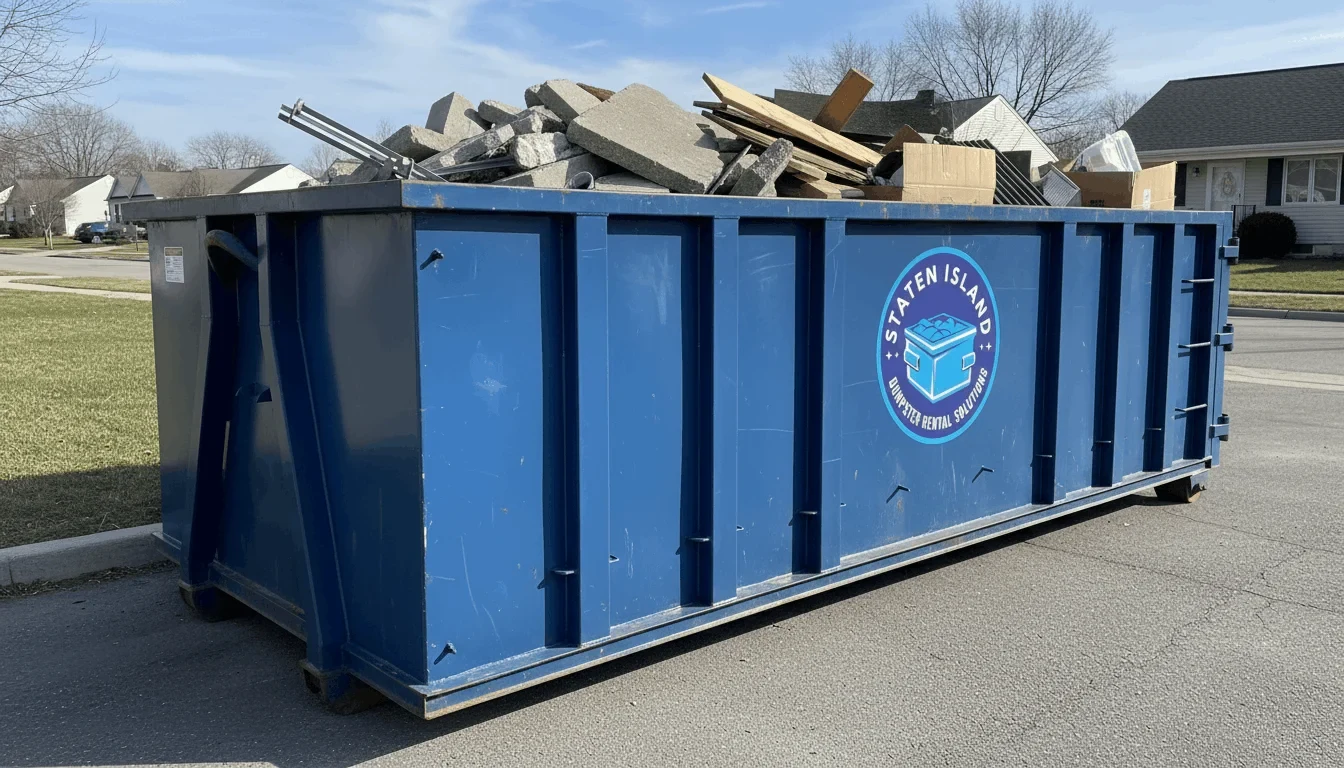
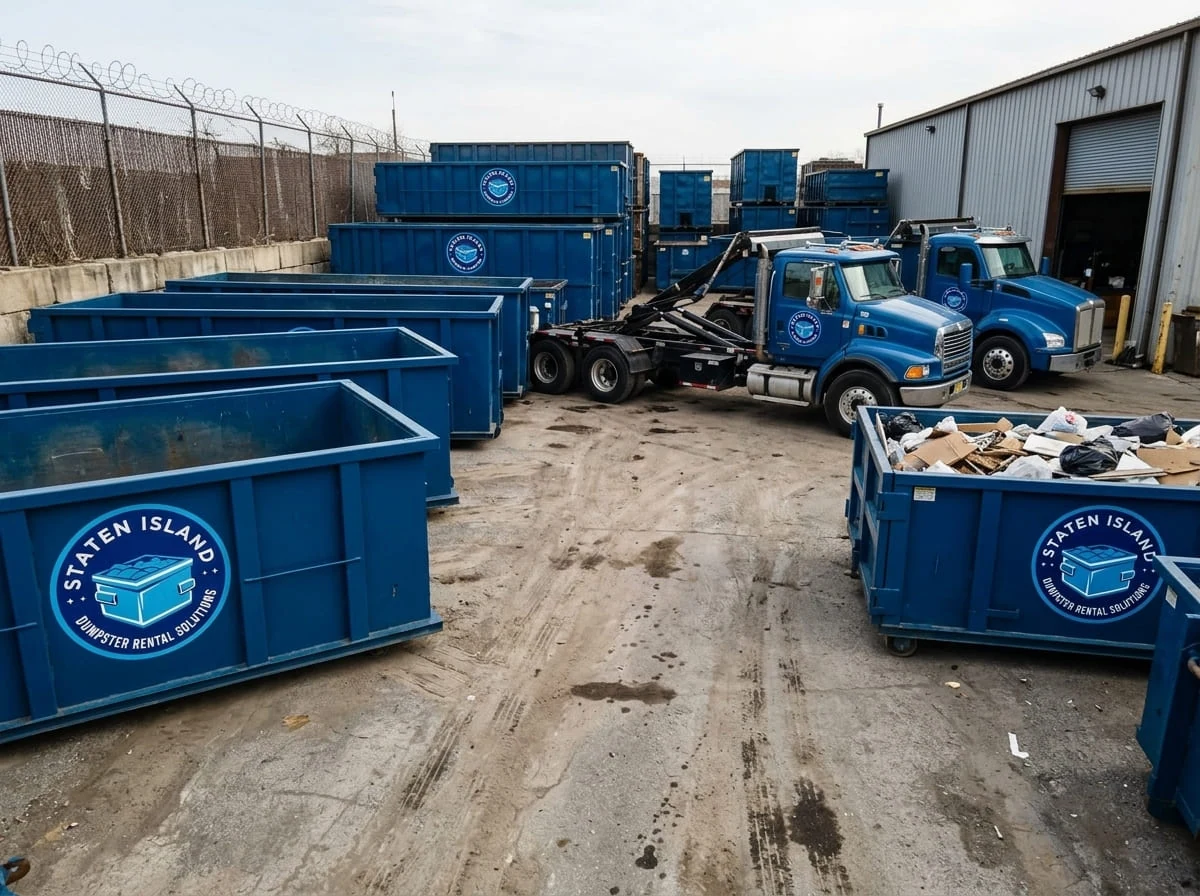
A single flood-damaged basement or a modest amount of wind debris often fits a 15 or 20 yard container. A larger property with multiple affected rooms, or flood damage combined with structural repair, more often calls for a 30 yard. Because storm cleanup often needs to move fast, call early — most Staten Island orders go out the same or next day when a container is available.
| Size | Dimensions | Capacity | Weight included | Best for |
|---|---|---|---|---|
| 10 Yard Dumpster | 14 ft long × 7.5 ft wide × 3.5 ft high | 50–70 bags | 1–2 tons | Small cleanouts, roofing shingles, tight driveways. |
| 15 Yard Dumpster | 16 ft long × 7.5 ft wide × 4.5 ft high | 80–100 bags | 2–3 tons | Flooring, bathroom or kitchen updates, multi-room cleanouts. |
| 20 Yard Dumpster | 22 ft long × 7.5 ft wide × 4.5 ft high | 110–130 bags | 3–4 tons | Medium remodels, roofing jobs, light construction. |
| 30 Yard Dumpster | 22 ft long × 7.5 ft wide × 6 ft high | 170–190 bags | 4–5 tons | Whole-home projects, office cleanouts. |
| 40 Yard Dumpster | 22 ft long × 7.5 ft wide × 8 ft high | 230–250 bags | 5–6 tons | Large builds, commercial or industrial jobs. |
Call (718) 808-9313 as soon as it's safe to assess storm damage on your property, and describe what's affected — flooding, wind debris, roof damage. We'll size the container and get it delivered as quickly as our schedule allows, priced flat-rate based on size, materials and duration.
Talk to a real person
Call and describe the job. Flat-rate pricing, a sized container, and a delivery time on the same call.
Mon–Sat 7:00am – 7:00pm
From this guide
At least 21 people died on Staten Island, the highest borough death toll in New York City, out of 43 total NYC deaths attributed to the storm.
Midland Beach, New Dorp Beach and Oakwood Beach on the East Shore saw the most severe damage, with floodwaters washing away entire blocks of houses in some areas.
Yes — the borough's East Shore and North Shore waterfront areas are recognized as vulnerable to coastal flooding and long-term sea-level rise, and more recent flash-flood events, including one in August 2026, have kept the issue actively discussed.
A single flood-damaged basement or modest wind debris often fits a 15 or 20 yard. A larger property with multiple affected rooms typically calls for a 30 yard.
Keep reading
Before you dig anywhere on Staten Island — a fence post, a landscaping project, a new footing — the service that actually covers the borough is New York 811. Here's what that means in practice.
ReadPlacing a dumpster on a Staten Island street involves a real NYC DOT permit process — but placing one on your own driveway generally doesn't. Here's how the structure actually works.
ReadHistoric Richmond Town preserves more than 30 historic buildings at the center of the island. Here's what renovation and cleanout work looks like for the neighborhood built up around it.
Read