A Landfill That Became the Largest in the World, Then Closed for Good
Fresh Kills Landfill opened in 1947, originally billed as a "temporary" solution, and went on to receive New York City's municipal solid waste continuously for more than five decades. By 1955 it had grown, by volume, into the largest landfill in the world — at points described as one of the largest human-made structures on Earth. It permanently closed to regular municipal waste on March 22, 2001, and was only briefly and exceptionally reopened later that same year for a solemn, specific purpose: processing debris recovered from the World Trade Center site following the September 11 attacks, an operation that involved more than 1.7 million work-hours and the recovery of thousands of personal effects, with the remaining material interred at the site's West Mound memorial area.
Not a Landfill Anymore — a 2,200-Acre Park Under Construction
This is the fact worth being precise about: Freshkills is no longer a landfill of any kind. The roughly 2,200-acre site has been undergoing a decades-long conversion into Freshkills Park, a public park project planned to be nearly three times the size of Central Park and eventually New York City's second-largest park. Construction on park infrastructure began in October 2008, and full build-out is currently projected for 2035 to 2037 — a genuinely long-term project. The first section open to the public, North Park Phase 1 (21 acres), opened October 15, 2023, and ongoing ecological monitoring has already documented more than 200 bird species using the reclaimed site — a real marker of how far the transformation has come.
What "Borough of Parks" Means for Staten Island Homeowners
Staten Island is sometimes called the "Borough of Parks" or the "Greenest Borough," a nickname attributed to NYC Parks and reflecting an unusually large share of protected green space — commonly cited as more than 170 parks covering roughly 12,000-plus acres, including the Freshkills conversion and the separate roughly 2,800-acre Greenbelt in the island's interior. For homeowners and landscapers, that borough-wide identity translates into a lot of real yard-waste, landscaping and outdoor-cleanup work — branches, soil, sod and seasonal debris — generated across the island every year.
Why This Matters for Your Own Cleanout or Yard-Waste Project
You can't haul yard waste or renovation debris to Freshkills Park itself — it's a closed former landfill converting into public parkland, not an active disposal site, and it isn't a drop-off destination for residents or contractors. What the Freshkills story does offer is useful context: Staten Island's waste-handling history runs deep, and a properly sorted, properly hauled load today — one that separates recoverable material like clean concrete, metal and yard debris — is part of the same broader shift the borough itself has been through at a much larger scale.
Landscaping and Yard Debris Near the Site
Communities near the West Shore and the Freshkills site itself — including parts of the island's Mid-Island and South Shore — regularly generate yard-waste loads from landscaping, storm cleanup and seasonal property maintenance. Our yard-waste dumpster service keeps that kind of clean load separate from construction debris, which matters both for proper handling and for keeping your project moving without cross-contaminating a load.
Sizing a Yard-Waste or Cleanout Container
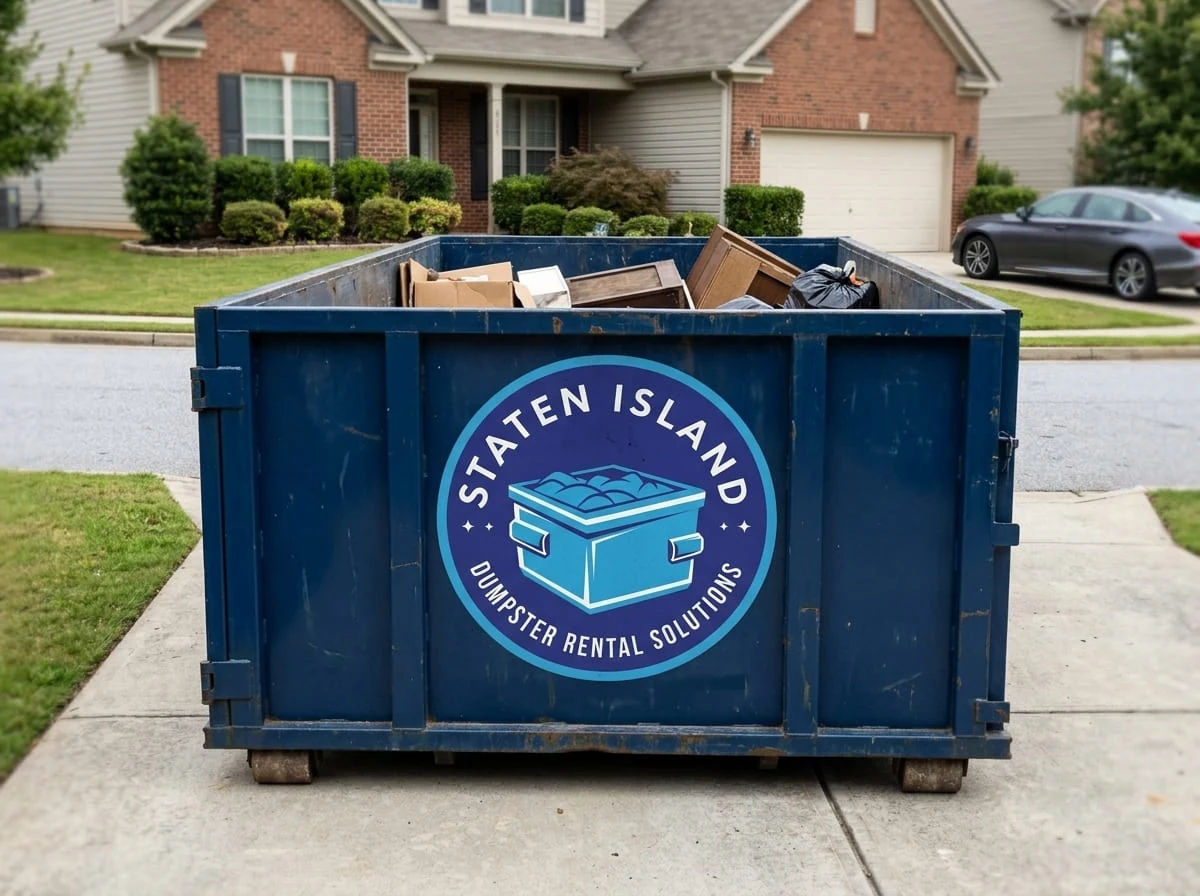
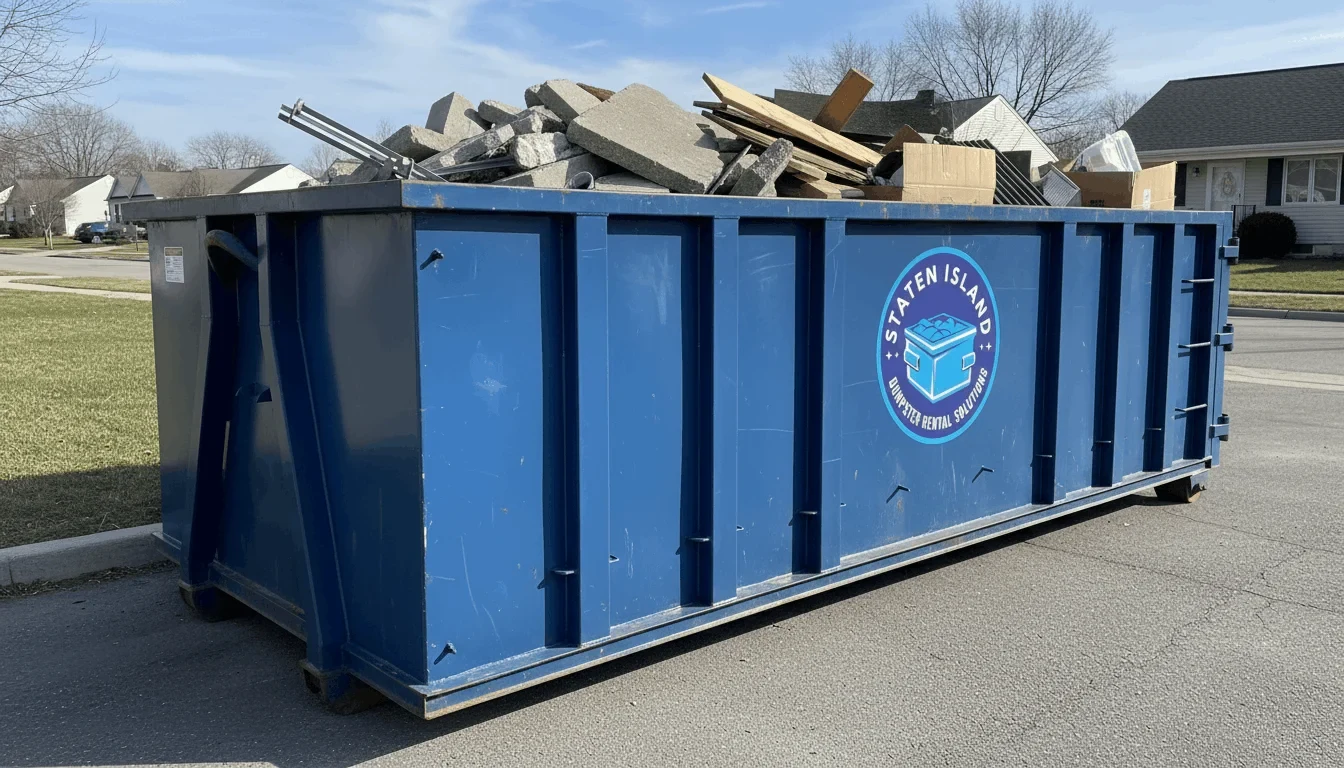
A single yard's worth of branches, soil and landscaping debris often fits our 10 or 15 yard container. A larger property cleanup, storm-related yard damage, or a combined yard-and-garage cleanout typically calls for a 20 yard. Whatever the scope, pricing stays flat-rate, based on the size, the type of materials and how long you keep the container.