The Bridge That Opened Staten Island's South Shore
The Verrazzano-Narrows Bridge opened its upper level on November 21, 1964, with the lower level following on June 28, 1969. Construction began August 13, 1959, and the project's overall engineering was directed by Othmar Ammann — the same legendary engineer behind the George Washington Bridge — with Leopold Just as design engineer and Milton Brumer as chief engineer. At a main span of 4,260 feet, it was the longest suspension bridge in the world at its opening, a record it held until 1981, and it remains the longest suspension span in the Americas. Three workers — Paul Bassett, Irving Rubin, and 19-year-old Gerard McKee — died during its construction, a sober part of the bridge's history worth acknowledging.
Getting the Name Right: Verrazzano, Not Verrazano
The bridge honors Italian explorer Giovanni da Verrazzano, credited with the first recorded European sighting of the island in 1524. A contracting-document typo dropped one "z" at the time of construction, and the bridge was officially known as the "Verrazano-Narrows Bridge" for over five decades. Governor Andrew Cuomo signed legislation on October 1, 2018 correcting the official spelling to the historically accurate double-z "Verrazzano-Narrows Bridge" — worth knowing if you're searching for the bridge by an older spelling.
How the Bridge Triggered a Suburban Building Boom
Before 1964, Staten Island's South Shore was largely still 17th-century-rooted Dutch and Huguenot farmland. The bridge, together with Staten Island's three New Jersey-bound spans (Bayonne, Goethals, Outerbridge Crossing) and the extension of the Staten Island Expressway, opened much of the island to rapid post-1964 residential development. That single piece of infrastructure directly explains why neighborhoods like Annadale, Eltingville, Great Kills and Tottenville built out so quickly through the 1960s and 70s — and it's why so much of the South Shore's housing stock today is now old enough to need real renovation work.
Renovating an Older South Shore Home Today
A home built during that first wave of post-bridge development is now roughly fifty to sixty years old — old enough for kitchens, bathrooms, roofing and mechanical systems to be well past their original install, and old enough that a full gut renovation is increasingly common rather than the exception. That generation of home construction is generally more straightforward to demo than Staten Island's much older North Shore housing stock, but it still generates a real mix of debris: dated fixtures, flooring, drywall, and — on many of these homes — an original roof nearing or past its expected lifespan.
Delivery Logistics Near the Bridge Approaches
The neighborhoods closest to the bridge's Staten Island approach, near Fort Wadsworth, see real daily traffic tied to bridge and highway access. If your project sits near the Staten Island Expressway corridor or the bridge approach itself, it's worth mentioning when you call so we can plan delivery and pickup around the busiest stretches of the day rather than into them.
Sizing for a South Shore Renovation
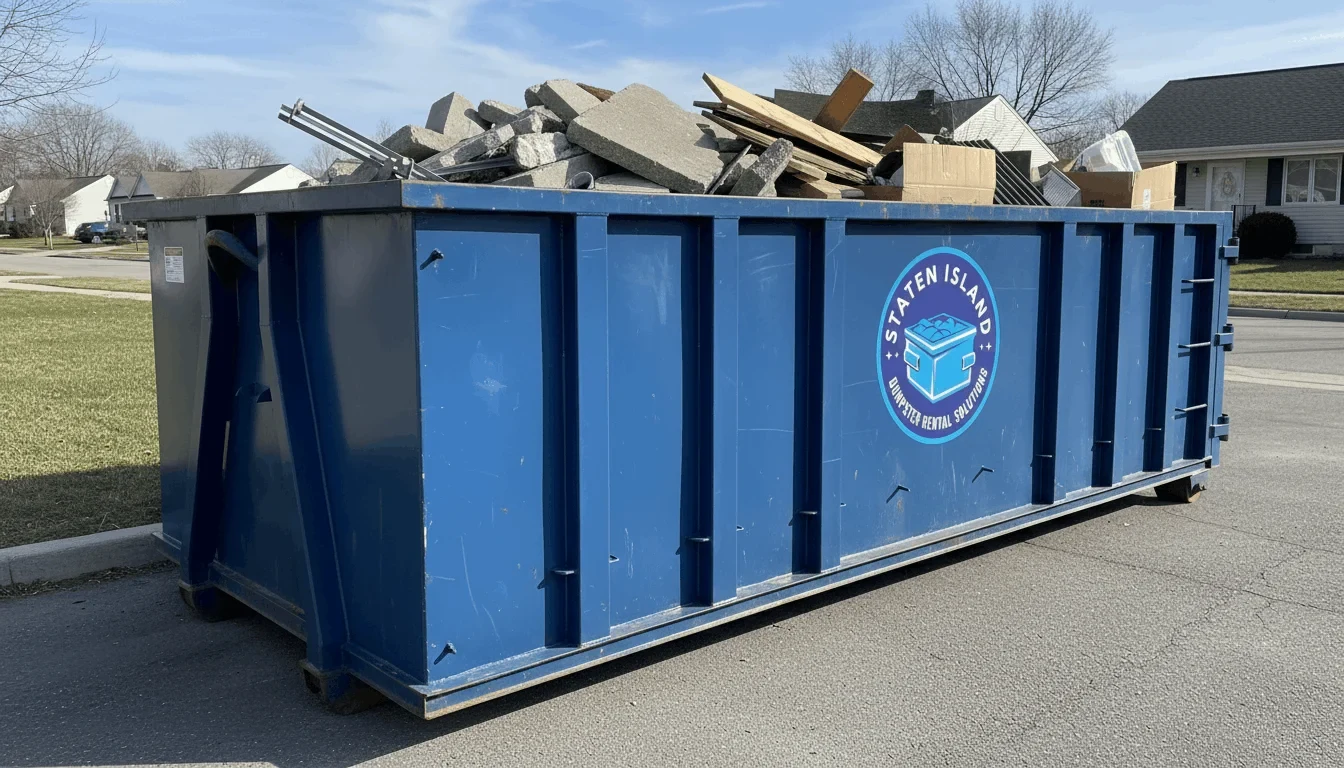
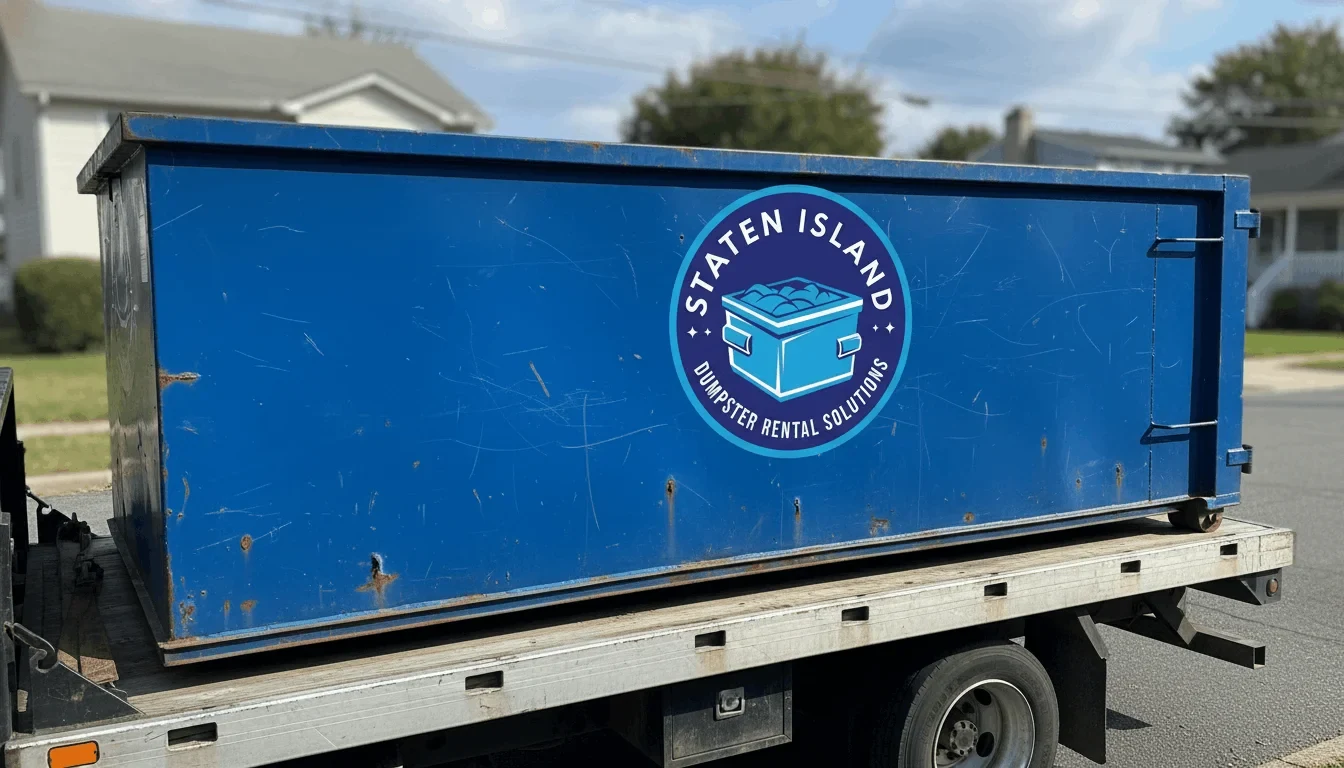
Most single-room updates on a South Shore home from this era fit a 15 or 20 yard container. A full gut renovation, a roof tear-off combined with interior work, or a whole-home remodel more often calls for a 30 yard. Whatever the scope, pricing stays flat-rate, based on the size, the type of materials and how long you keep the container.